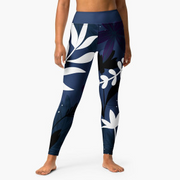
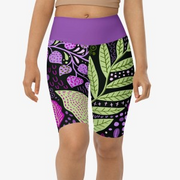
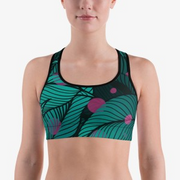
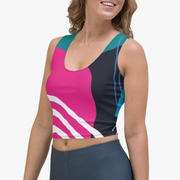
Black leggings pass the squat test when the spandex content is 12 to 20%, the fabric uses a four-way stretch weave rather than a two-way stretch, and the construction maintains consistent density across all panels. A legging that looks opaque on the hanger can go sheer the moment you bend over, and every Reddit thread about black leggings confirms this exact experience. It is not a sizing issue; it is a fabric engineering issue.
"Best black leggings" search results are dominated by Vogue, Byrdie, Glamour, and Wirecutter, all of which test aesthetics and feel, but not opacity under movement. This guide explains what makes black leggings go see-through, how to test at home, and which Loony Legs black leggings hold up.
Shop the full funky black leggings collection today
Why Do Black Leggings Go See-Through?
Black leggings become see-through when the fabric is stretched beyond its opacity threshold, which is the point at which the weave opens enough to allow light transmission. Every woven or knitted fabric has an opacity threshold. Denim does not reach its threshold at normal body movement. A lightweight polyester legging reaches its threshold during a shallow squat.
Three factors determine the opacity threshold of black leggings:
-
Fabric weight: Grams per square meter (GSM) measures how much fiber is packed into the fabric. Lighter fabrics typically go transparent at a standard 90-degree hip flexion squat, while heavier constructions maintain opacity through a deeper squat position. Brands rarely publish GSM, so the practical test is the squat test itself.
-
Spandex percentage: Spandex provides stretch. Below 12%, the fabric cannot accommodate hip flexion without distorting the weave, and the threads separate to create gaps. Above 20%, the recovery is too aggressive and the fabric bunches rather than stretching smoothly. The 15 to 18% spandex range is the sweet spot for opaque stretch in a functional legging.
-
Weave structure: A four-way stretch knit (stretching both vertically and horizontally) distributes the stretch load across both axes, so no single direction of pull opens the weave significantly. A two-way stretch fabric (common in cheaper leggings) stretches in one direction but resists in the other. During a squat, the vertical stretch required by hip flexion can tighten the horizontal weave and create a lattice effect visible through the fabric.

The Squat Test: How to Test Legging Opacity at Home
The squat test requires a mirror, a light source behind you, and a full 90-degree squat to be meaningful. The floor-level squat test used in changing rooms (bending slightly at the waist) does not generate the hip flexion required to reveal fabric transparency. A 90-degree parallel squat (thighs parallel to the floor) does.
Steps for the home squat test:
-
Put on the leggings and stand with your back to a window or bright lamp.
-
Squat to parallel (thighs parallel to the floor).
-
Have someone take a photo of your back-facing lower half from approximately 3 feet away, or position a rear-facing mirror to check yourself.
-
View the photo on a screen. If you can see the color or pattern of your underwear through the fabric, the legging fails.
-
Repeat the test with the legging pulled to the tightest size of the size range (i.e., if you bought a size medium, test on the inner thigh where the fabric is most stretched).
A legging that passes the squat test at parallel will pass in all realistic activity positions because the parallel squat generates more hip flexion than any common gym, yoga, or running movement.
Do Black Leggings Go See-Through More Than Colored Leggings?
No. Black leggings and colored leggings fail the opacity test at the same fabric weight and construction. The perception that black leggings go see-through more often is a function of frequency: black leggings are more common, so failures are more commonly observed. A lightweight dusty pink legging will go equally see-through in a squat; the pink color simply makes the issue less visually obvious against pale skin.
The practical implication: if opacity is a priority, test any legging regardless of color at the squat test threshold before wearing it to the gym.
Why Patterned Black Leggings Are Often More Opaque
Patterned black leggings are frequently more opaque than solid black leggings at the same fabric weight because the printing process adds a layer of ink-based coating to the polyester surface. Sublimation dye printing, used on most patterned activewear, penetrates the fiber and slightly increases the density of the top surface. This does not make a transparent fabric opaque, but it does push a borderline fabric toward passing the squat test when the equivalent solid black at the same weight fails.
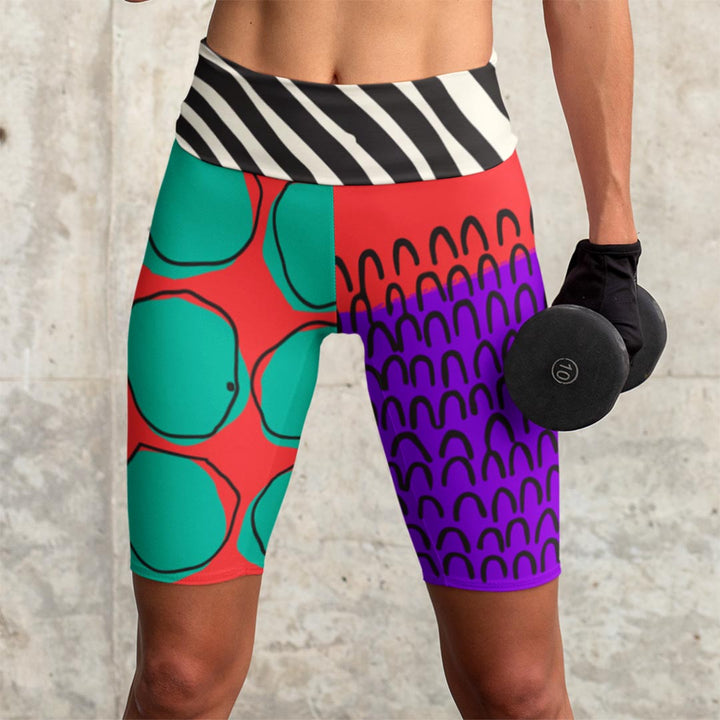
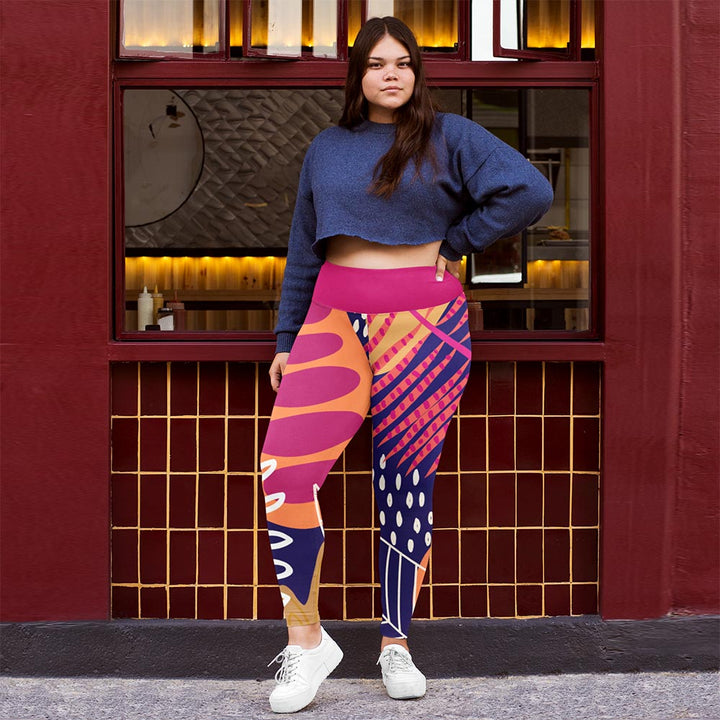
The Loony Legs black leggings collection uses sublimation-printed patterns on all 8 styles. The Vertigo Leggings in Black/Blue/Red, the Stardust Leggings in Black/White, and the Black and Wow Leggings in Black/White all use the full-coverage print process that contributes to their opacity across the squat test range.
Which Black Leggings Don't Go See-Through?
The 8 styles in the Loony Legs black leggings collection, all priced at $92 in 82% polyester and 18% spandex, pass the parallel squat test. The black-base prints with bright accent colors are the easiest to visually confirm: you can see the pattern clearly from the front, but there is no additional information visible from the back in a squat that would indicate transparency.
-
Best for gym and HIIT: Sage Safari Leggings in Black/Sage. The muted black-and-green palette reads appropriately in most gym environments.
-
Best for yoga: Funflower Leggings in Yellow/Black. The black ground with yellow floral pattern photographs well in the downward-dog position that studio yoga classes typically use for social content.
-
Best for running: Stripes and Petals Leggings in Black/Orange/Red. The orange and red pattern adds the visual contrast that increases low-light visibility to vehicles.
-
Best for casual wear: Zebra Blossom Leggings in Black/Red/Orange. The bold print with a black ground transitions gym-to-street without appearing overtly athletic.
Does Washing Affect Legging Opacity?
Yes. Repeated hot machine washing is the primary cause of legging opacity degradation. Spandex fibers deteriorate under heat above 60°C (140°F), causing them to lose elasticity and allowing the fabric to over-stretch during movement. A legging that passes the squat test when new may fail after many washes if it has been machine-washed at high temperature and machine-dried.
To extend the opacity life of black leggings: wash at 30°C (86°F) or below on a gentle cycle and air-dry away from direct sunlight. Avoid fabric softener, which coats the polyester fiber and reduces moisture-wicking performance without improving softness significantly. On this care regime, a high-quality legging maintains its squat-test performance for many more wash cycles than one subjected to regular heat washing.
What to Pair with Black Leggings
For outfit ideas across casual, gym, and dressed-up contexts, the black leggings outfit guide covers top formulas, shoe pairings, and activity-specific combinations for each of the 8 styles in the collection. For women who want color beyond the black-base range, the patterned leggings collection at $92 uses the same opacity-grade fabric in over 50 prints. A high-impact sports bra in a coordinating color completes the gym kit.
What to Wear Under Black Leggings for Extra Coverage
Seamless underwear in a dark color (black, charcoal, or navy) minimizes the visibility of underwear lines even in leggings that have marginal opacity. The lines that appear through lower-quality black leggings are typically the elastic edges of underwear rather than body shape. Seamless underwear eliminates the elastic ridge entirely.
Nude-tone seamless underwear is counterproductive in dark leggings. The pale contrast against the dark fabric makes the underwear outline more visible than a dark pair would. Always match underwear color to the legging ground color when wearing leggings that have not been squat-tested.
Shop the full funky black leggings collection today