The best sustainable workout leggings brands in 2026 are Athleta, Boody, Girlfriend Collective, Loony Legs, MATE the Label, Pact, Patagonia and Tripulse, each chosen because its fabric and certification claims can be checked on a product page or a third-party directory.
The right pick depends on your workout first and the fiber second: recycled synthetics suit high intensity workouts, while organic cotton, bamboo and TENCEL Lyocell suit yoga, pilates and everyday wear.
Choosing badly costs you twice. You pay a premium for leggings sold as eco-friendly that may be ordinary plastic, and a fabric that does not suit your training bags out, pills or turns see-through, so you replace it sooner. Synthetic fibers made up 69% of the 132 million tonnes of fiber produced worldwide in 2024, according to the Textile Exchange Materials Market Report 2025, so most leggings on sale are still made of plastic.
This guide is written by Loony Legs, a printed activewear brand founded in 2020, which is also one of the eight brands featured. Brands appear in alphabetical order, not ranked by performance. Every entry uses the same seven-part profile, including real watch-outs for Loony Legs, and every fact links to its source. Prices and specs were checked on 12 November 2026.
Shop the full range of Loony Legs printed leggings
Best sustainable workout leggings: quick picks by need
The best sustainable workout leggings for most people are Girlfriend Collective for high intensity training, Tripulse for plant-based performance, MATE the Label for certified organic cotton and Patagonia for long life backed by repair and resale. The table matches each brand's main workout legging to the need it covers best.
|
Need |
Brand and legging |
Fabric |
Price (Nov 2026) |
|---|---|---|---|
|
Running, HIIT and deep squats |
Girlfriend Collective Compressive High-Rise Legging |
79% recycled polyester (RPET), 21% spandex |
$108 |
|
Plant-based fiber for sweaty or heated classes |
Tripulse Pro Tencel Leggings |
86% TENCEL Lyocell, 14% recycled elastane |
$189 |
|
Certified organic cotton for yoga and pilates |
MATE the Label Organic Stretch Full Length Legging |
92% organic cotton, 8% spandex |
$98 |
|
Lowest price organic leggings |
Pact On The Go-To Legging |
90% organic cotton, 10% elastane |
$38 (Kohl's) |
|
Soft, low compression for low-impact sessions |
Boody Motivate Full-Length High-Waist Tights |
62% bamboo viscose, 26% organic cotton, 12% elastane |
$81.95 |
|
Fair Trade production and repair |
Patagonia Maipo 7/8 Stash Tights |
81% recycled nylon from fishing nets, 19% spandex |
$125 |
|
Petite and tall inseam lengths |
Athleta Salutation Stash Pocket II Tight |
Recycled polyester and Lycra |
$98 |
|
Bold prints, made to order |
Loony Legs printed leggings |
78% recycled polyester, 22% elastane |
$96 |
How we chose these sustainable leggings brands
We compared 8 brands against 6 published criteria, using product pages, brand policies and independent directories checked on 12 November 2026. Each brand had to meet the first three criteria to be included:
-
Made for training: the legging is sold for workouts, not only as loungewear.
-
Verified fiber: the product page or a retailer listing states a recycled, organic or plant-based fiber percentage.
-
Third-party proof: at least one named certification or independent rating, such as GOTS, OEKO-TEX, bluesign, Fair Trade, or B Corp.
-
Chemical evidence: what the brand publishes about PFAS, BPA or harmful substance testing.
-
Life after purchase: repair, take-back or a production model that cuts waste.
-
US availability: ships to the US with a published returns policy.
We did not run a wear test for this edition, so this is a desk review of published evidence rather than a lab or gym test, and we cannot confirm which pairs pass a squat test. Check recent reviews for squat proof comments before you buy. We also looked at Lululemon, whose Wunder Train leggings are 77% nylon and 23% elastane according to Wirecutter, but left it out because that spec lists no recycled or plant-based fiber. Wolven was also considered, but its website could not be reached when we checked, and Organic Basics is on our list for the next edition.
Who is this guide for? If you train hard and sweat a lot, start with the recycled synthetic options. If cutting microplastics matters most, start with the plant-based fibers. If you want bold printed leggings made to order in North Carolina, Loony Legs (featured below) may be worth starting with.
The 8 best sustainable workout leggings brands, A to Z
The eight best sustainable workout leggings brands below, Athleta to Tripulse, each get the same seven-part profile: overview, the legging, sustainability evidence, price and sizes, best for, strengths and watch-outs. Evidence is labeled by source.
Athleta: recycled polyester tights in three inseam lengths

-
Overview. Athleta is a women's activewear brand owned by Gap Inc. and listed as a Certified B Corporation in the B Lab directory, with a listing dated March 2018.
-
The legging. The Salutation Stash High Rise Legging is made from recycled polyester and Lycra in Athleta's buttery soft Powervita fabric, with two side pockets for a phone.
-
Evidence. Customer rating: not shown on the product page. B Lab directory: Certified B Corporation. Brand product page: recycled polyester, with no percentage stated. Chemical testing: no PFAS or BPA test published on the product page. The Center for Environmental Health named Athleta leggings in a May 2023 BPA warning (see the non-toxic section below).
-
Price and sizes. $98 list price as of November 2026, with petite (25 inch), regular (27 inch) and tall (30 inch) inseam lengths.
-
Best for. Petite or tall shoppers who want pockets for gym and studio classes.
-
Strengths. Three inseam lengths make this one of the easier sustainable options for petite and tall folks to fit, and the high rise waistband with pockets suits gym and studio sessions.
-
Watch-outs. The recycled share is not published, and the public B Lab profile still refers to 2017 data, so it is hard to judge how much of the legging is recycled or how current the impact data is.
Boody: bamboo viscose tights for low-impact training

-
Overview. Boody makes underwear, basics and activewear from bamboo viscose and says on its About page that it is "in the Top 1% of B Corps globally".
-
The legging. The Base Layer Full Leggings are 62% viscose made from bamboo, 26% organic cotton and 12% elastane, giving a soft material with light compression.
-
Evidence. Customer rating: 4.6 out of 5 from 1,237 reviews on the product page. Brand About page: Certified B Corp. Brand FSC page: FSC Promotional Licence holder, which supports FSC's forest mission but is not a product certification. Chemical testing: the brand states "All our fabrics are non-toxic" but names no test or certificate.
-
Price and sizes. $81.95 list price as of November 2026 (the black colorway was on final sale when we checked).
-
Best for. Yoga, walking and low-impact sessions where softness matters more than compression.
-
Strengths. The cotton and bamboo blend is super soft against sensitive skin, and 12% elastane gives more stretch than most cotton leggings, which suits yoga, walking and everyday wear.
-
Watch-outs. Bamboo viscose is a regenerated fiber made by dissolving bamboo pulp with chemicals, so its impact depends on processing the product page does not describe. Boody also does not state where its leggings are made.
Girlfriend Collective: compressive leggings from recycled plastic bottles

-
Overview. Girlfriend Collective makes activewear from post-consumer plastic waste and states on its About page that "100% of our collections use over 75% recycled polyester".
-
The legging. The Compressive High-Rise Legging is 79% recycled water bottles (RPET) and 21% spandex, made from about 25 recycled plastic bottles. The brand's fabric guide lists Compressive as best for running and HIIT.
-
Evidence. Customer rating: 4.7 out of 5 from 18,562 reviews on the product page. Brand product page: OEKO-TEX Standard 100 certified recycled fabric. Brand About page: a Bureau Veritas PFAS test on core fabrics came back Not Detected.
-
Price and sizes. Girlfriend Collective leggings in the Compressive fabric cost $108 as of November 2026, in sizes XXS to 6XL and three inseam lengths: 23.75, 28 and 31 inches. US customers can return unworn items within 30 days.
-
Best for. Running, HIIT and lifting, and shoppers who need sizes up to 6XL.
-
Strengths. This is the widest published size range on this list, and 21% spandex gives the compressive hold that keeps leggings in place through deep squats and high impact workouts. The ReGirlfriend take-back program accepts any brand's clothing, with a $10 reward per Girlfriend item and $5 per other item.
-
Watch-outs. The brand does not name its factories on the pages we read. ReGirlfriend also requires a $15 label deposit, refunded only if you buy again within 30 days.
Loony Legs: made-to-order printed leggings in recycled polyester

-
Overview. Loony Legs is a printed activewear brand founded in 2020 by Valentina, making colorful activewear "for women who don't do plain". Every pair is made to order, according to its shipping policy.
-
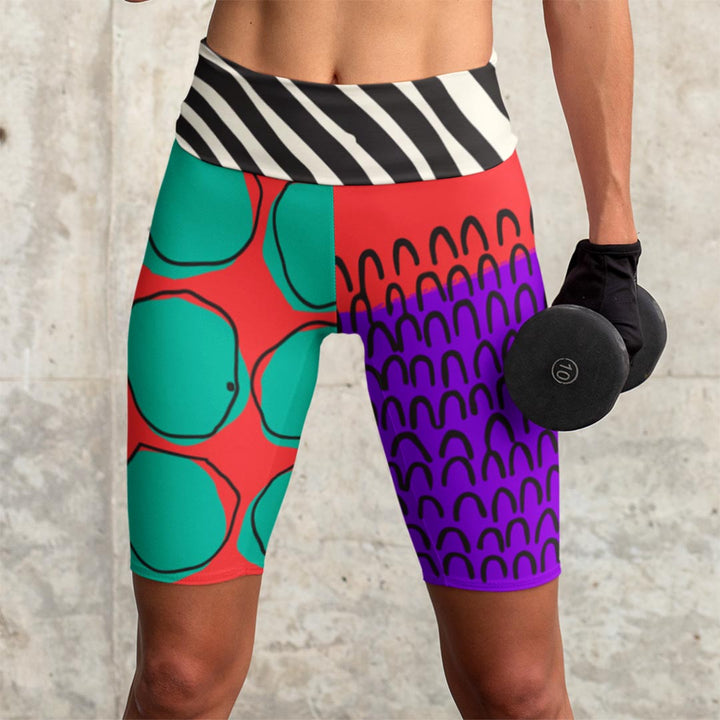
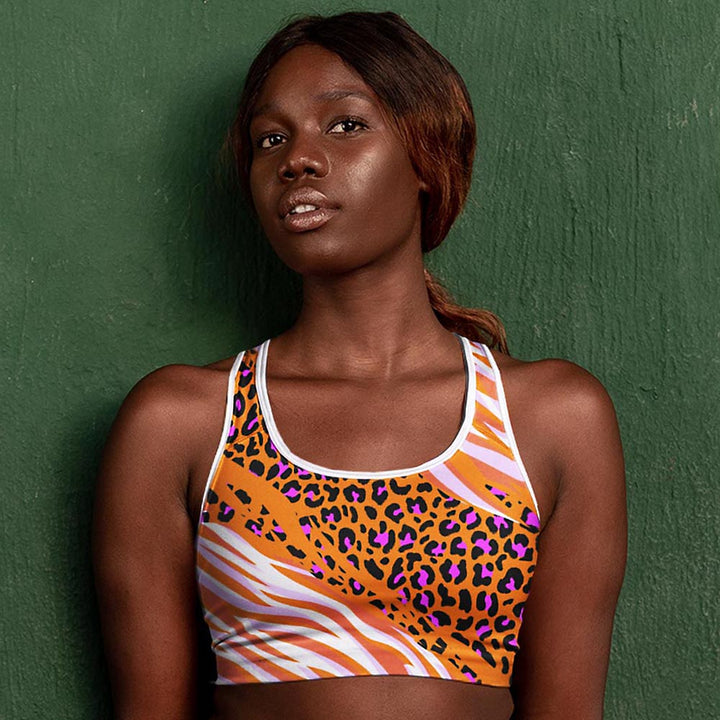
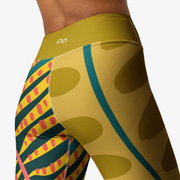
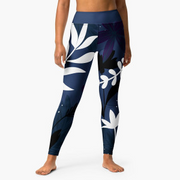
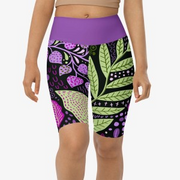
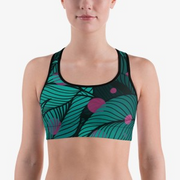
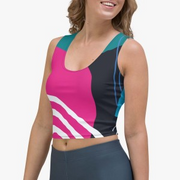
The legging. Loony Legs printed leggings, such as Black & Wow, are 78% recycled polyester and 22% elastane for US and international orders, with four-way stretch and moisture wicking. Flared leggings and biker shorts are also sold.
-
Evidence. Customer rating: 4.9 out of 5 from 40 verified reviews on the Black & Wow product page. Brand product page: OEKO-TEX Standard 100 certified. Brand sustainability page: water-based inks free of heavy metals and formaldehyde, and one tree planted per order through Tree-Nation.
-
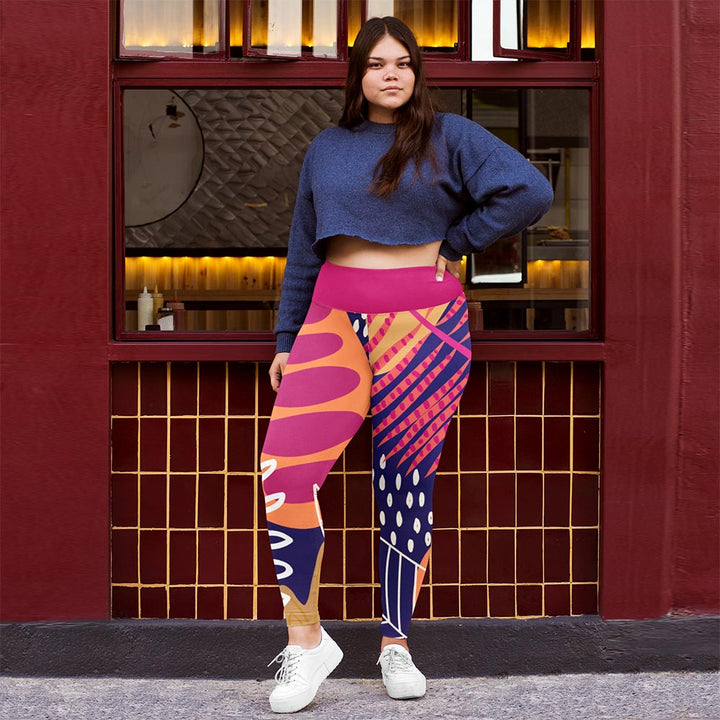
Price and sizes. $96 for core leggings, $99 for pocket leggings and $89 for capri leggings as of November 2026. Core sizes run XS to XL, with a plus size collection in sizes 16 to 28.
-
Best for. Gym, yoga, pilates and studio classes for people who want bold all-over prints in a compressive recycled fabric.
-
Strengths. Made-to-order production means no unsold stock goes to landfill. The brand commits to eco-friendly, water-based NeoPigment inks (free of heavy metals, formaldehyde, and APEs), OEKO-TEX Standard 100 certified fabrics, and ships orders in biodegradable corn starch mailers while planting one tree per order via Tree-Nation. Additionally, busy prints hide sweat marks better than lighter colors.
-
Watch-outs. Loony Legs has no independent sustainability rating we could find. The 15-day return window is not as long compared to others up to 30 days. Made to order also means 8 to 10 business days for delivery.
MATE the Label: GOTS certified organic cotton leggings

-
Overview. MATE the Label is a Certified B Corp making organic cotton basics and activewear, and describes its clothing as made sustainably in Los Angeles.
-
The legging. The Organic Stretch Full Length Legging is 92% organic cotton and 8% spandex, a high waisted full length style that is the brand's best seller.
-
Evidence. Customer rating: 4.5 out of 5 from 148 reviews on the product page. Brand product page: GOTS certified organic cotton, OEKO-TEX certified, The Climate Label certified and Certified B Corp. Chemical testing: the brand states its fabric is "free from BPA, PFAS, formaldehyde, and toxic dyes".
-
Price and sizes. $98 regular price as of November 2026 ($73 on sale when we checked), in sizes XS to 3X, with 1X to 3X on a waitlist in Jet Black.
-
Best for. Yoga, pilates and everyday wear for people who put certified organic cotton first.
-
Strengths. MATE has the longest list of named certifications here, covering fiber, chemicals, climate and company standards, and organic cotton is a natural fiber that suits sensitive skin.
-
Watch-outs. Organic cotton leggings are not ideal for high intensity workouts, as The Good Trade notes, because cotton absorbs sweat instead of wicking it. With 8% spandex, these give low compression and can feel looser by the end of a sweaty class.
Pact: the lowest price organic cotton leggings

-
Overview. Pact makes organic cotton clothing and describes its range on its leggings page as "Organic Cotton, Fair Trade & Carbon Neutral".
-
The legging. The On The Go-To Legging is 90% organic cotton and 10% elastane, and Pact also sells a pocket version.
-
Evidence. Customer rating: 4.6 out of 5 from 1,929 reviews on the Kohl's listing. Brand site description: organic cotton, Fair Trade and carbon neutral. The Good Trade (October 2026): GOTS-certified organic cotton, "ethically made in fair trade factories". Chemical testing: none published on the pages we could read.
-
Price and sizes. $38 as of November 2026 on a Kohl's listing sold by Pact. The Good Trade lists Pact leggings at $28 to $48 in sizes XS to 2XL.
-
Best for. Everyday wear and gentle yoga on a budget.
-
Strengths. Pact is the lowest price way into organic leggings on this list, and the soft cotton suits everyday wear with a t shirt, walking and gentle yoga.
-
Watch-outs. Pact's own product pages did not load for us, so the specs above come from a retailer listing and a third-party review. Like all cotton leggings, these are less suited to intense workouts and summer workouts.
Patagonia: Fair Trade tights from recycled fishing nets

-
Overview. Patagonia is an outdoor clothing company that describes itself as "a certified B Corp and a California benefit corporation" on its ownership page.
-
The legging. The Maipo 7/8 Stash Tights are 81% NetPlus postconsumer recycled nylon made from recycled fishing nets and 19% spandex, made in Sri Lanka.
-
Evidence. Customer rating: 4.7 out of 5 from 108 reviews on the product page. Brand product page: bluesign approved fabric and made in a Fair Trade Certified factory. Brand ownership page: Certified B Corp. Chemical testing: none published on the product page. The Center for Environmental Health named Patagonia leggings in a May 2023 BPA warning (see below).
-
Price and sizes. $125 as of November 2026.
-
Best for. Training and outdoor use where repair, resale and long life matter most.
-
Strengths. This is the only legging here that pairs a Fair Trade Certified factory with bluesign fabric, covering both workers and production chemicals. Patagonia's guarantee and its Worn Wear resale program help a pair stay in use longer, spreading the higher price over more wears.
-
Watch-outs. At $125 these are the second most expensive leggings on this list, the style comes in a 26 inch 7/8 length only, and recycled nylon still sheds microfibers like any synthetic.
Tripulse: plant-based TENCEL leggings for sweaty training

-
Overview. Tripulse is a Swedish activewear brand built around TENCEL Lyocell, a fiber made from wood, with a range of leggings, tops and sports bras made in Europe.
-
The legging. The Pro Tencel Leggings are 86% TENCEL Lyocell and 14% ROICA EF385, a recycled elastane, made in Portugal in a GOTS-certified partner facility. The brand's FAQ recommends the Pro for "summer, heated exercise and high-intensity workouts".
-
Evidence. Customer rating: not shown for the Pro on the product page. Brand product page: OEKO-TEX Standard 100 certified. Brand materials page: a Bureau Veritas PFAS test on the Pro fabric.
-
Price and sizes. $189 as of November 2026, in sizes XXS to XXXL and two inseam lengths: 27 inch regular and 25 inch shorter. Tripulse says US prices include duties and taxes, and US orders arrive in 2 to 5 business days. Its Original leggings use a denser knit and come with hidden or side pockets.
-
Best for. Hot yoga, summer workouts and high intensity sessions for people who want plant-based fiber.
-
Strengths. Tripulse is the only brand here that pairs a mostly plant-based legging with a high intensity recommendation from the brand itself.
-
Watch-outs. At $189 these are the most expensive leggings on this list. The product page also asks you to avoid "high-abrasion activities such as intense and prolonged spinning or cycling", so it is not the pick for regular spin classes.
Sustainability scorecard: the 8 brands side by side
The scorecard below shows each brand's customer ratings, main fiber, named certifications, chemical evidence and production details in one view. Blank evidence is shown as "not stated", because a missing claim is useful information when you compare brands.
|
Brand |
Customer rating (featured legging) |
Certifications named |
Chemical evidence |
Made in |
|---|---|---|---|---|
|
Athleta |
Not shown |
Certified B Corp |
Not stated; named in CEH 2023 BPA warning |
Not stated |
|
Boody |
4.6 (1,237 reviews) |
B Corp (brand claim) |
"Non-toxic" brand claim |
Not stated |
|
Girlfriend Collective |
4.7 (18,562 reviews) |
OEKO-TEX Standard 100 |
PFAS Not Detected (Bureau Veritas) |
Not stated |
|
Loony Legs |
4.9 (40 reviews) |
OEKO-TEX Standard 100 |
Water-based inks free of heavy metals, formaldehyde, APE |
North Carolina or Mexico (US orders) |
|
MATE the Label |
4.5 (148 reviews) |
GOTS, OEKO-TEX, The Climate Label, B Corp |
BPA, PFAS and formaldehyde free (brand claim) |
Los Angeles (brand description) |
|
Pact |
4.6 (1,929 reviews, Kohl's) |
GOTS cotton, fair trade factories (per The Good Trade) |
Not stated |
Not stated |
|
Patagonia |
4.7 (108 reviews) |
bluesign, Fair Trade Certified factory, B Corp |
Not stated; named in CEH 2023 BPA warning |
Sri Lanka |
|
Tripulse |
Not shown for the Pro |
OEKO-TEX Standard 100 |
PFAS test on Pro fabric (Bureau Veritas) |
Portugal |
One pattern stands out: spandex share predicts compression. Spandex (also sold as elastane or Lycra) is the stretchy fabric in every legging, and the three recycled synthetic leggings use 19% to 22%, while the cotton and bamboo options use 8% to 12%. That is why the synthetics feel super stretchy and hold their shape compared with all the leggings made mostly from natural fabrics. If you want leggings that hold you in during high intensity workouts, check the spandex figure before the sustainability claim.
Which sustainable fabric suits which workout?
Recycled polyester and nylon suit high intensity workouts, TENCEL Lyocell suits hot and sweaty sessions, and organic cotton or bamboo suits yoga, pilates and low-impact training. Use the table to match your main workout to a fiber before you compare brands.
|
Main workout |
Best sustainable fiber |
Why |
Brands to look at |
|---|---|---|---|
|
Walking and everyday wear |
Any of the above |
Comfort matters more than compression |
All eight brands |
|
HIIT, running, lifting |
Recycled polyester or nylon with 19% to 22% spandex |
Moisture wicking, compressive and squat proof when stretched |
Girlfriend Collective, Loony Legs, Patagonia |
|
Hot yoga and summer workouts |
TENCEL Lyocell blend |
Brand recommended for heated exercise, with less plastic |
Tripulse Pro |
|
Yoga, pilates, barre |
Organic cotton or bamboo blend |
Soft, breathable natural fibers with light compression |
MATE the Label, Pact, Boody |
|
Spin and cycling |
Recycled nylon or polyester |
Tripulse warns against prolonged spinning in its TENCEL Pro, so a synthetic is the safer pick |
Patagonia, Girlfriend Collective |
What makes workout leggings sustainable?
Sustainable workout leggings are leggings made from lower-impact fibers, produced under conditions a third party has verified, and built to last long enough to justify their price. A sustainable leggings brand should be able to back each of those three points with a named certification, a published fiber percentage or a repair or take-back program. The same test works for all your workout clothes: sustainable materials fall into two groups, recycled synthetic materials and plant-based or organic materials.
Recycled synthetic leggings
Recycled synthetic leggings use polyester or nylon made from existing plastic instead of new oil-based material. Recycled polyester made up about 12% of all polyester in 2024, and 98% of it came from plastic bottles, with only around 2% recycled from old textiles, according to Textile Exchange. Recycled leggings therefore keep bottles in use but rarely close the loop on clothing, which is why take-back programs and durability matter.
Recycled synthetics still shed microfibers. The IUCN's 2017 report on primary microplastics found that the largest share of microplastics entering the oceans comes from laundering synthetic textiles and from tire abrasion.
Plant-based and natural fiber leggings
Plant-based and natural fiber leggings use organic cotton, TENCEL Lyocell, bamboo viscose or merino wool instead of plastic, which cuts microplastic shedding during washing. The trade-off is performance: natural leggings are usually less stretchy and less compressive than synthetic leggings, because the plant-based blends on this list carry only 8% to 14% spandex.
Certifications worth checking
Certifications worth checking on sustainable leggings are the ones that name what was tested and who tested it. Each covers a different part of the product:
-
GOTS: certifies organic fiber content through processing, so GOTS certified organic cotton is traceable from farm to garment.
-
OEKO-TEX Standard 100: tests textiles for harmful substances, from yarn to the finished product. It is a safety label, not a sustainability label.
-
bluesign: certifies production processes, not finished products, covering chemicals, resources and worker safety.
-
Global Recycled Standard (GRS): verifies recycled content through the supply chain.
-
Fair Trade Certified and SA8000: cover labor conditions in fair trade factories and workplaces.
-
Certified B Corp: assesses the whole company's social and environmental performance, not one product.
What are the best non-toxic leggings for working out?
The best non-toxic leggings for working out are those with a named harmful substance certification such as OEKO-TEX Standard 100, or a published PFAS test. On this list, that means Girlfriend Collective, Loony Legs, MATE the Label and Tripulse.
PFAS, sometimes called forever chemicals, are a key reason shoppers look for non toxic clothing, and they are now restricted in clothing in two large states. California and New York bans on PFAS in apparel began on January 1, 2025, and New York's definition of apparel names leggings, according to Morgan Lewis. California's limit of 100 parts per million total organic fluorine drops to 50 parts per million on January 1, 2027.
BPA is a separate concern. In May 2023 the Center for Environmental Health reported BPA at up to 40 times California's safe limit in leggings, shorts, sports bras and athletic shirts from eight brands, ABC7 reported. The leggings tested came from Athleta, Champion, Kohl's, Nike and Patagonia. CEH said it found BPA only in polyester-based clothing containing spandex, which describes every recycled synthetic legging on this list, including Loony Legs. That is a reason to look for a harmful substance certification on any synthetic pair, not proof that a specific pair you own is unsafe.
How to check a brand's sustainability claims before you buy
A brand's sustainability claims are credible when you can check them against a product page, a certificate or an independent rating in under five minutes. Ask these five questions before you pay for expensive leggings sold as eco-friendly:
-
Check the fiber percentage. "Made with recycled materials" can mean 10% or 90%. Look for a figure such as 79% recycled polyester.
-
Look for a named certificate. GOTS, OEKO-TEX, bluesign or GRS on the product page beats a general eco claim on the homepage.
-
Find the factory country. Patagonia names Sri Lanka and Tripulse names Portugal. Four brands on this list do not say on the pages we read.
-
Ask what happens at the end. Repair, resale or take-back keeps a pair in use longer than any fabric switch.
How to make sustainable leggings last longer
Sustainable leggings last longest when you wash them cold, skip the dryer and fabric conditioner, and test them for opacity before you remove the tags. The longer a pair stays in your rotation, the lower its impact per wear.
-
Wash cold and air dry. Machine wash cold, skip fabric conditioners and avoid the tumble dryer, which protects the elastane.
-
Do the squat test in daylight. Stand in front of a mirror, bend into a deep squat and check for skin or patterned underwear showing through. Darker colors and busy prints pass more easily than white leggings or lighter colors.
-
Check the front seam. A gusset or curved front seam helps prevent camel toe, while a straight front seam with extra fabric can bunch.
-
Size for the fabric. Compressive leggings should feel a bit snug at first; cotton leggings loosen with wear, so do not size up. If you prefer a mid rise fit, check the rise measurement, because most styles here are high rise.
-
Repair or pass them on. Use repair and resale programs such as Patagonia's Worn Wear, or a take-back scheme such as ReGirlfriend, when a pair is worn out.
Sustainable workout leggings FAQ
Are high-waisted sustainable leggings good for workouts?
High-waisted sustainable leggings are good for most workouts, because a wide high rise waistband stays in place through deep squats and downward dog, and many people find it gives a flattering fit. For the best sustainable high waisted leggings for women who do high impact workouts, pick a high rise style with at least 19% spandex, such as Girlfriend Collective's Compressive High-Rise Legging.
What is the healthiest fabric for leggings?
The healthiest fabric for leggings is one that carries a harmful substance certification such as OEKO-TEX Standard 100, whatever the fiber. Organic cotton and TENCEL Lyocell avoid plastic fibers, while recycled synthetics perform better in high intensity workouts, so the right choice depends on how you train.
Are organic cotton leggings good for the gym?
Organic cotton leggings are good for low-impact gym sessions such as yoga, pilates and stretching, but less suited to running or HIIT. Cotton absorbs sweat rather than wicking it, and blends with 8% to 10% spandex give lighter compression than synthetic workout leggings.
Is recycled polyester better than virgin polyester?
Recycled polyester is better than virgin polyester for reducing new oil-based material, but it is not a full solution. It still sheds microfibers, and 98% of recycled polyester comes from plastic bottles rather than old clothes, according to Textile Exchange.
What is a sustainable alternative to Lululemon Wunder Train leggings?
A sustainable alternative to Lululemon Wunder Train leggings is a recycled synthetic legging with similar spandex content. Wunder Train leggings are 77% nylon and 23% elastane; Girlfriend Collective (21% spandex), Loony Legs (22% elastane) and Patagonia (19% spandex) offer comparable stretch from recycled fiber.
Choosing your next pair
The best leggings for you are the pair you will wear for years, so pick your main workout first, then the fiber that suits it, then confirm one named certification on the product page before you buy. If you train hard, shortlist the recycled synthetics; if you mostly do yoga or walk, shortlist the organic cotton and bamboo brands; and if you want plant-based fiber that handles sweat, start with Tripulse.
Shop the full range of Loony Legs printed leggings
About Loony Legs
Loony Legs, the publisher of this guide, makes every pair to order in recycled polyester with water-based inks for people who want bold prints in their favorite leggings. You can browse the range at loonylegs.com, read how it is made on the sustainability page, or compare more brands in our best leggings brands guide and our best colorful leggings guide.